Andy Tindel Attorney at Law
Andy Tindel
Intellectual Property Law

PATENT LAW INFORMATION

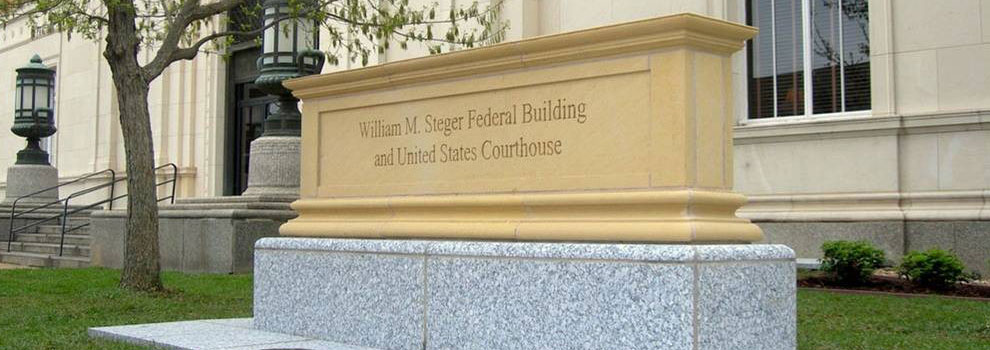
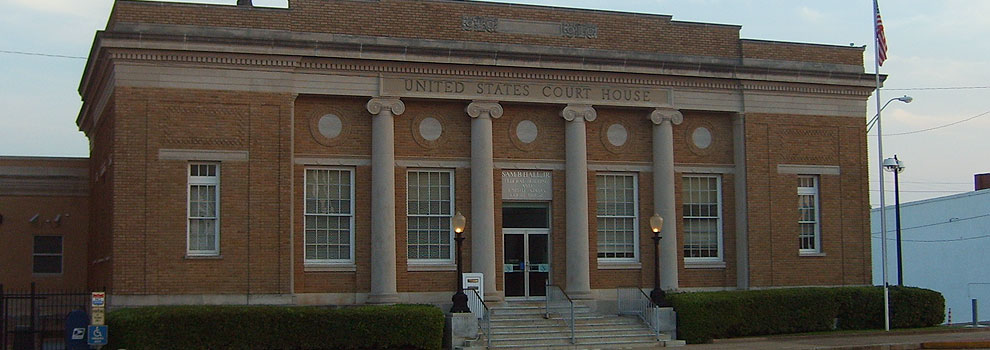
PICTURED ON THE LEFT IS UNITED STATES MAGISTRATE JUDGE CHARLES EVERINGHAM  WITH ANDY TINDEL AT JUDGE EVERINGHAM'S SWEARING-IN CEREMONY AT THE FEDERAL COURTHOUSE IN MARSHALL, TEXAS

WHAT IS A PATENT?
A United States patent for an invention is a property right given to an inventor by the United States government. A patent allows an inventor to sue in civil court to exclude others from making, using, offering for sale, or selling the invention in the United States, or from importing the invention into the United States. A patent does not give an inventor the right to make, use, sell, offer to sell, or import the invention. This distinction matters because one patented invention may include another patented invention belonging to a different inventor, who also has the same right to exclude. Rights to use such an "included" invention are usually licensed or purchased.

The United States Patent and Trademark Office also grants utility patents, design patents, and plant patents. A utility patent may be granted for the invention or discovery of any new and useful process, machine, manufactured article, or chemical composition. Utility patents may also be granted for new and useful improvements in existing processes, machines, articles, and compositions, provided that the improvements are not considered obvious extensions of existing technology. Patents are not granted for physical laws or mathematical algorithms, or for other things and processes already found in nature. The current term for a United States patent is twenty (20) years from the date on which the patent's application was filed.

A design patent may be granted for a new and original ornamental design for a manufactured article, such as a hood ornament. While a utility patent protects the way an invention is used and works, a design patent protects the way it looks. It may be possible to obtain both utility and design patents for different aspects of the same invention. The current term for a United States design patent is fourteen (14) years from the date on which the patent is granted.

A plant patent may be granted for the invention or discovery and asexual reproduction of a distinct, new plant other than a tuber or a plant found in the wild. Means of asexual reproduction include cuttings, layering, budding, and grafting but do not include growth from a seed. The current term for a United States plant patent is twenty (20) years from the date on which the patent's application was filed.

WHY OBTAIN A PATENT?
A patent gives an inventor a temporary monopoly on his/her invention. An inventor can sue competitors who attempt to steal the benefits of an inventor's inspiration and hard work, forcing infringers to cease making, using, selling, or offering to sell the patented invention. Under some circumstances an inventor may also collect substantial monetary damages.

For some inventors, a patent is the cornerstone of their�business enterprise. A patent gives an inventor control over a portion or even the whole of a relevant market, providing an inventor with an opportunity to profit�from their invention. Smart investors often place great value on the intellectual property holdings of a company. A patent portfolio may greatly increase a company's stock price.

Other inventors prefer to sell or license the rights to make, sell or use their inventions. The exclusivity provided by a United States patent usually increases the sale price of the rights to an invention. If an inventor prefers to retain ownership of his/her invention, patent licensing provides a way to generate revenue from the invention without taking the risk inherent in starting a business.

HOW DO I KNOW WHETHER I SHOULD TRY TO PATENT MY INVENTION?
An inventor should get a patent if marketing his/her invention is likely to produce a net profit. To determine that, an inventor needs to do some preliminary market research. Provost Umphrey does not provide market research or marketing services, but we can point you to some useful resources.

The best resources will depend on the specific market. For example, if the invention is a device intended for consumers, an inventor should visit outlets that might sell such a device. Check trade association publications for market sales figures and ads for similar products. Trade shows can be an excellent place to see what is available in a specific market. An inventor can usually get into a trade show with a business card and a payment of a fee. A local library with a good business section may have publications targeted to the relevant market for the invention, with trade show listings. An invetor may also search online for trade show listings at www.tsnn.com or the Trade Show News.

An inventor may also be able to obtain product information directly from manufacturers. In addition to helping an inventor decide whether his/her invention is marketable, manufacturer information may help with finding a buyer or licensee later. However, when communicating with a manufacturer now, an inventor should be careful not to disclose the invention. The time for that will come later. The local library may be helpful in finding manufacturers. Try business listings such as the Thomas Register and SuperPages.com. or internet search engines like Google. Some manufacturers may have detailed product information on their websites while others may require that you write for brochures or catalogs.

In each information resource, an inventor should look for devices that attempt to fill the same consumer need as the claimed invention, even using very different designs. Also, of course, look for devices with similar designs. If an inventor finds any, see who makes the devices, how they compare with the inventor's device, how they are distributed, and how much they cost. Is the market crowded, competitive, with low profit margins? Do one or two distributors control all of the outlets? Can an inventor's device be made cheaply enough to compete? How is an inventor's device different from or similar to�competitive devices? Is an inventor's device lighter, smaller, faster, quieter, safer, easier to use or fix, better looking, or of better quality than a competing device? Does an inventor's device have as much consumer appeal (whatever that means in th relevant market for the invention)? An inventor should take good notes because disclosure of some or all of this information may be required in the application for the patent on his/her invention.

If you do not find any similar inventions, is it because you are looking in the wrong place? Or because no one else has thought of your invention? Or because it would cost more than most people would pay? Ask yourself honestly: if this was someone else's invention and you saw it on a store shelf, would you pay for it? How much? Answers to these questions can help you determine whether it is at least possible for you to make money, and to get a rough idea of how much.

Because the research just described can take considerable time and effort,there are many invention marketing firms that claim to do market research for inventors. Some may offer a legitimate service, but in recent years this has been a fertile area for scam artists. A common scam is a "report" on the marketing prospects of your invention. For a large amount of money, you receive a very thick, impressive-looking "report." However, most of the "report" is in reality vague, generic boilerplate text that could apply to almost any invention, with a bit of word-processing to personalize it. It is often filled with inflated (and sometimes fabricated) industry sales figures that promise great wealth in your future. And while it might be interesting and even useful to know that a billion dollars worth of widgets similar to yours were sold last year, the REAL questions are whether you can get YOUR widget to market and whether many people would buy YOUR widget if you did.

I am not suggesting that everyone who promises invention marketing assistance is a con artist, but I AM suggesting that you be very careful in hiring such assistance. The USPTO and the attorneys general of several states have shut down and prosecuted some of the worst offenders, but that just makes room for newcomers. You can obtain more information on invention fraud from InventorEd, Inc.

HOW DO I KNOW WHETHER MY INVENTION IS PATENTABLE?
You may obtain a utility patent for your invention if it is new, useful, and not obvious when compared to inventions already in the public domain. You may obtain a design patent if your design is new and original when compared to designs known to the public. In patent prosecution, "useful" essentially means "not useless." The real question is whether your invention is novel (new) and non-obvious. Very roughly speaking, it is novel and non-obvious if the underlying idea is not already available to the public. A reference or object that makes some or all of your invention publicly available is called prior art. If there is sufficiently old prior art that completely describes or embodies your invention, your invention is not patentable.

Finding prior art usually requires a search. When you apply for a patent, the USPTO will do its own prior art search. The USPTO is pretty good at finding prior patents. However, prior art can include magazine and newspaper articles, journal articles, operating manuals, marketing brochures, websites, stuff in the bottom of somebody's toolbox, you name it...any reference or object that describes or embodies your invention. Unfortunately, patent examiners (the Patent Office employees who actually evaluate patent applications) are not given the resources to thoroughly search non-patent references, so some patents are issued even when undiscovered prior art exists.

No search can guarantee discovery of all prior art, but a thorough search before application preparation can increase the probability of finding art that the examiner might miss. A more thorough (and expensive) search buys you a higher level of assurance.

You can specify a ceiling for the cost of a search. To choose an appropriate cost ceiling, you need to balance the expense of a thorough pre-examination search against the loss you may suffer if you develop, patent, and market your invention, and your patent is later invalidated. That does not happen often, but it is risky to ignore the possibility. If a search does locate prior art that makes your invention unpatentable, it is better to find out early in the process before you invest more time and money.

Finding prior art may reduce your chances of obtaining a patent but strengthens any patent you do obtain. At the end of every utility patent you will see one or more claims. These claims effectively define how much of a given market a patent holder actually controls. If your patent has "broad" claims, you control more. If your patent has "narrow" claims, you control less. Patent attorneys and agents try to increase the value of your patent by drafting the broadest claims that the Patent Office will allow. The Patent Office will not allow any claim that could describe a device or method that is already described in prior art. The goal, then, is to write claims that are as broad as possible but avoid prior art. An attorney or agent can only avoid prior art that he or she knows about, so it is best to have a search done before filing an application.

A thorough search also protects your patent after it issues. The single most important reason for obtaining a patent is acquiring the right to sue someone to prevent them from making, using, selling, or offering to sell your invention. If you do sue someone for patent infringement, they will probably hire a patent attorney to defend them, and the patent attorney will almost certainly attack the validity of your patent. One of the most effective ways to do this is to find prior art that the examiner missed. Since an attorney defending an infringement suit can afford to do a far more thorough search than an examiner, a patent that relies entirely on an examiner's search is more vulnerable than a patent that relies also on a thorough pre-examination search.

You are not legally required to do a search, but for the reasons given above I strongly recommend that you do at least a basic search. If you are somewhat familiar with the patent system and your budget is tight, you can do your own searching with the U.S. Patent Office search engine. A basic novelty search by a professional searcher will usually cost closer to $800 and will produce better results. Whether or not you opt for a search, any relevant art that you know of must be disclosed to the Patent Office if you file a patent application. Failure to do so may invalidate any patent you obtain.

How can I be sure that an attorney or agent will keep my invention confidential?
The professional responsibility rules of the United States Patent & Trademark Office and all state bars strictly prohibit attorneys from revealing client confidences like invention disclosure. To do so would likely mean being disbarred, sued, and prosecuted. If you have concerns about confidentiality you may call the USPTO's Office of Enrollment and Discipline at (703) 305-9104.

The patent searchers and technical artists I work with are experienced patent professionals with whom I have strict confidentiality agreements. Their livelihoods depend on their integrity.

CAN I TELL ANYONE ELSE ABOUT MY INVENTION?
The safest course of action is to tell no one about your invention except your patent attorney or agent until you have filed a patent application. Patents are awarded only for inventions that are not already known to the public, so revealing your invention to anyone except your patent counsel could prevent you from ever obtaining a patent. And, of course, another person who knows of your invention may file a patent application before you, and/or start producing knock-offs.

Disclosing your invention without having a patent application on file is a little like jumping off a cliff-you cannot change your mind once you have jumped, so you had better be sure that you will like the landing. At minimum, you would need to have written, signed, enforceable non-disclosure agreements with everyone who is NOT a patent attorney or agent.

Although a nondisclosure agreement may offer some protection, it is difficult to draft an agreement that covers every situation that may arise, and even more difficult to enforce such an agreement in the event of a dispute between the parties. You are in the strongest position if you have an application on file before you approach a potential buyer or licensee. If you are in a hurry, a provisional patent application (described below) may allow you to file sooner.

The US gives you a one-year "grace period" between the date you disclose or sell your invention to the public and the date after which your invention can no longer be patented. However, most other countries offer NO grace period, so disclosure can instantly terminate potential patent rights in much of the world. You may not be thinking of international markets at this point, but if your invention does well in the marketplace, carelessness now may cost you dearly later.

Some inventors attempt to obtain financial backing or even sell their invention before filing a patent application. However, manufacturers are often wary of inventors who approach them with "an idea." A manufacturer who evaluates and rejects an inventor's idea runs the risk of later being sued by the inventor if the manufacturer markets anything that the inventor might imagine to have been derived from the idea, even if the manufacturer's product is basically different and/or was invented independently in-house. A company may therefore be unwilling to sign an agreement or evaluate an invention because it might then be hampered in its own development and marketing efforts. Consequently, some companies have a flat policy of refusing to even LOOK at independent submissions.

If you've defined your idea well enough to formulate patent claims, the manufacturer can at least look to the claims to determine what it can and cannot do. On the other hand, a manufacturer who signs an agreement that essentially forbids it from disclosing or using your invention without clearly defining your invention opens itself to liability. A manufacturer or investor will also take you much more seriously if you own a property right in your invention.

WHEN SHOULD I START THE PATENTING PROCESS?
Once you have determined that your invention has market potential you should start the patenting process immediately. As mentioned above, one of the many obstacles to obtaining a patent is prior art. If anyone finds prior art that was available before you conceived your invention, you cannot obtain a patent. Also, someone else may be working on the same invention, and if they file first, you may be out of luck. It is therefore very important that you get the earliest possible filing date, or priority date, by filing as soon as you have completed an application.

How do I start the patenting process?
Patent law is complex and the patenting process can take many different paths, but the starting point is always the inventor's description of the invention. You are the expert on your invention. Your most important contribution to your utility patent application is a complete, logically-organized, written description of your invention in all its possible forms. A design patent depends entirely upon the drawings for its disclosure, so for a design patent application you must provide high-quality drawings or photographs that completely depict your design.

A complete description of a utility invention allows me to write better claims, which give your invention better protection. Also, a complete description reduces the amount of time I have to spend drafting the application, which in turn reduces my fee. Although collecting and recording this information can be a tedious task, it is critical to the strength of your patent.

If you are still working on your utility invention, you should establish the earliest possible conception date for your invention by recording every day's work in a bound notebook. The pages should be glued and/or stitched to eliminate any later suggestion that you added or removed pages. Make detailed entries, so that a stranger reading the notebook would understand what part of your invention you had figured out on that day. Of course, you should keep the contents of the notebook secret from anyone who is not legally obligated to keep your invention confidential.

Have your notebook entries witnessed regularly and often. This could be done by a trusted person who would make a convincing witness in court, is not a family member, and has signed an enforceable nondisclosure agreement. Or, you could have the entries notarized. Do NOT waste your time mailing your invention description to yourself, even by registered mail. Envelopes can be opened and resealed, making them unconvincing evidence of your date of conception.

The Patent Office also provides a secure but more cumbersome invention-recording alternative called a Disclosure Document Deposit Request (Form PTO/SB/95). If you send the completed form, ten dollars, and whatever invention description you currently have to the Patent Office, the Office will retain that description for two years after the date the Office receives your submission. If within those two years you have not referred to this Disclosure Document in a patent application, the Patent Office will destroy the document. Do not confuse the Disclosure Document with an Information Disclosure Statement (IDS), which is a list of related art that you submit with a patent application.

The invention-recording methods just described are intended to provide evidence of the date on which you conceived your invention. That date matters in the United States because US patent law awards a patent to the first inventor to conceive an invention, whereas the rest of the world awards patent to the inventor who files the first application. Also, proof of an early conception date can eliminate what would otherwise be troublesome prior art. However, none of these methods can replace a patent application, provide an effective filing date for a patent application, or in any way stop the "grace period" on disclosure from running out. Further, even if you can establish an early date of conception, you also have to prove that after conception you exercised diligence in reducing the invention to practice. The laws relating to date of conception, diligence, and reduction to practice are too complex to summarize here. If you are attempting to establish a priority date earlier than the filing date of a patent application, you need the advice of a registered patent practitioner.

When you have completed the important parts of your invention, so that it could actually be made and used, you should move directly to writing a description. This description will ideally be complete and well-organized. However, it is easy to get "writer's block" if you try to organize your ideas before you have really expressed them, so if you get stuck, just write down everything you know about your invention in any order and worry about continuity and organization later.

For a device or system description it often helps to start with the most central component (if there is one...if not, just pick one) and work your way out to every other component. Identify and separately describe every individual part of your invention. Write down everything you know about every part. If you can, make a sketch, label the parts in the sketch with numbers, and refer to each part by number in your description. Then describe how the parts connect to each other, how they function, and how the whole device functions. Describe the environment in which the device functions. For example, if your invention is an improved water bed mattress, describe the frame, headboard, etc.

If you can, explain how and why your device is different from and better than existing, similar devices. Include any experimental data and material specifications you may have. Be sure to describe the simplest, most stripped-down version of your device that will still produce a desirable result. Eliminate as many parts as you can. Also, be sure to describe the version that produces the best results, and any design variations that might be useful. Imagine how someone else might try to "design around" your patent, producing the result you want with a slightly different design. Also, try to imagine how someone might produce a different desirable result using your design.
If your invention is a method or a process, you should identify and separately describe every step in the process. Describe every order in which the steps could be performed. Describe what the process consumes and produces. Describe the environment in which the process is performed. If you can, sketch a process or flow diagram. Label the steps in the diagram with numbers and refer to each step by number in your description.

If you can, explain how and why your process is different from and better than existing, similar processes. Include any experimental data you may have. As with a device, be sure to describe the simplest, most stripped-down version of your process that will still produce a desirable result. Eliminate as many steps as you can. Also, be sure to describe the version that produces the best results, and any variations that might be useful. Imagine how someone else might try to "design around" your patent, producing the result you want with a slightly different process. Also, try to imagine how someone might produce a different desirable result with your process.
Regardless of the nature of your invention, the description you submit with your patent application must "teach" your invention so thoroughly that a person with "ordinary skill" in that field of technology can make and use your invention just from reading your patent. The amount of knowledge that passes for "ordinary skill" varies with the technology and can be hard to define with precision. Also, remember that an ultimate purpose of your patent is to persuade a jury with no technical background that your invention really is new, useful, and non-obvious. So even if your patent counsel and the patent examiner understand your description, a jury that does not understand could invalidate your patent. For these reasons, it is best to err on the side of thoroughness in your description.

Once you have assembled the most complete description that you can reasonably provide, send your description to your patent counsel, who will then make any changes in the description that are necessary to strengthen your patent or comply with Patent Office rules. Your counsel will draft claims, assemble formal drawings and other required parts, and, on your instructions, file your application.

The Patent Office will normally publish your application eighteen months after filing. However, if you do not plan to apply for a patent outside the US and do not wish to have your invention publicly disclosed before a patent issues, you may request at the time of filing that the Patent Office withhold publication. A non-publication request saves you a $300 publication fee.

What if I do not have any drawings of my invention?
Although drawings are not an absolute requirement for every patent, the Patent Office always requires them for design patents and usually requires them for mechanical and electrical inventions. If you are not able or do not wish to provide drawings, a professional draftsperson can create them. Drawings cost from about $45 to over $100 per sheet, depending on complexity.

A common practice for utility patent applications has been to file an accurate self-drawn sketch with the application. The Patent Office notes that you have filed an informal drawing and will require a formal drawing before issuing a patent. However, as long as your sketch can be understood clearly and contains every element you claim, the examiner will consider your application. If and when the examiner indicates that you can obtain a patent, you can then pay for professional drawings. Note, however, that this practice may conflict with the recent change in US patent law allowing the Patent Office to publish your application at eighteen months after filing. Since many patents take longer than eighteen months to issue, you will have to supply formal drawings prior to eighteen-month publication if you wish to avoid having your informal drawings published with your application.

With design patent applications, the drawing IS the disclosure, so any inadequacy in the drawings may result in a rejection that can be answered only by filing a new (and necessarily later) application. For this reason, it is crucial in a design patent application that you file high-quality drawings or photographs showing every element of your invention WITH your application.

What is a provisional patent application?
A provisional application is available for a utility invention and is essentially a description of your invention that you put on record with the US Patent Office to establish a priority date. Used properly, a provisional application can provide you with an earlier filing date than you could have obtained if you waited to complete a regular application. It also entitles you to put "Patent Pending" on your invention. It is less expensive than a regular application and does not require claims, an oath, or formal drawings. The current USPTO filing fee for a provisional application is $80.00 for an independent inventor.

However, a provisional application by itself will not give you enforceable patent rights. The Patent Office does not examine a provisional application. Therefore, the fact that you have filed a provisional application in no way guarantees that you will be able to obtain a US patent. It merely establishes an early priority date IF you file a regular application within a year of filing the provisional application. And, for the provisional application to be worth anything, your written description of your invention has to be just as complete as the description you would file with a regular application. Use the guidelines described above to write the description for a provisional application.

Provisional patent applications have sometimes been used by con artists to defraud inventors. A common scheme has been to advertise a US patent application for around $100. The con artist accepts whatever documents the inventor sends, without any review. The con artist then fills out a provisional application form, writes a check for the provisional application fee, and sends everything to the Patent Office, pocketing the difference between the application fee and the inventor's payment. If the description is not adequate to later support a regular patent application, the inventor has wasted the fee. Worse, the inventor may delay filing a regular application, believing that the provisional application provides protection, only to later find that the opportunity to obtain a patent has been irretrievably lost.

How long will it take to get a patent?
Difficult to predict. For a utility patent, the whole process usually takes at least 12 months, more typically 18-24 months. However, patents for some areas of technology may take several years. Also, some applications meet with more resistance from the Patent Office, and require several years of arguments and continuations.

How much will it cost?
As an example, an average preparation fee for a basic utility patent application might be about $4500. In addition, the Patent Office's utility filing fee for a small entity is currently $370. Drawings might cost $200. A reasonably thorough search might cost $750. Altogether this would total about $5820 to finish and file. However, actual costs vary considerably. Preparation fees may vary between $2000 and $10,000 depending on the complexity of your invention and the quality of the description you provide. You can provide your own drawings, if they meet Patent Office standards, and you can skip the search (not recommended). If you do not plan to file a patent application outside the US, a non-publication request when you file will save you a $300 publication fee later. A design patent usually costs between $1000 and $1500 as filed.

Once a patent application is filed the Patent Office responds with up to three office actions. Each office action may contain one or more rejections or objections. In order to overcome rejections and objections and to continue to seek a patent, the applicant must make a complete response to each office action. Because an office action response may range in complexity from a trivial correction to many pages of carefully-researched legal arguments with extensive claim amendments, the resulting fees may vary from a few hundred dollars to several thousand.

If the Patent Office allows your claims and decides to issue you a utility patent, you will have to pay an issue fee of $640. Finally, once you have a patent, the Patent Office will charge you a maintenance fee of $440 at 3.5 years, $1,010 at 7.5 years, and $1,550 at 11.5 years. If these payments are made in a timely manner, your utility patent will remain in effect for twenty years from the date your application was filed. No maintenance fees are required for a design patent.

Once I have applied for a patent, how do I get my invention to market?
Your basic choices are: do it yourself, license to one or more manufacturers, or sell your rights completely. Doing it yourself means taking on all of the risk and responsibility of starting a manufacturing (and, perhaps, distribution) company. If all goes well, you make the most money this way, but if business is poor, you can lose your shirt. High risk, potentially high reward or severe loss. Do you want to be an entrepreneur as well as an inventor?

Many inventors prefer to license their inventions to existing manufacturers. Licensing allows you to retain ownership of your invention while others take the risks of manufacturing and marketing. Usually, you get a royalty on what they sell, although licensing deals can be configured in an almost endless number of ways. You do have to keep track of what your licensees owe you, which can be a chore or an additional expense. Licensing generally offers much lower risk with a somewhat smaller potential reward.

Complete sale of rights usually gets you more in the near term than licensing. If the invention does poorly in the market, you suffer no further loss. However, if the invention does well, you gain nothing more. Complete sale might or might not be the best long term deal. Some people choose this option simply because they want to get as much money out of the invention as is immediately possible, so they can move on to the next project without having to keep track of licensees.

Approach manufacturers you have identified as making products that would complement or compete with your product. Also, find companies that compete with those manufacturers. A competitor who does not have a product like yours may be aching for shot at that market segment.

Choosing a marketing path can first be a what-do-I-want-to-do-with-my-life question, then a business question, then a legal question. I will be glad to explore your options with you after your application is filed.


TRADEMARK LAW INFORMATION

What is a trademark?
A trademark is a word, phrase, graphic design, or symbol that enables a customer to recognize that a product bearing the trademark originates from a particular source. A trademark may also be a combination of words, graphic designs, and/or symbols, and under some circumstances may include sounds, smells, and colors. If the word, phrase, graphic design, or symbol is associated with a service instead of a product, the mark is a service mark. Trademarks and service marks are legally very similar, so for simplicity's sake I will refer generally to "marks."

A mark allows a customer to choose a product or service sold by a desirable source and to avoid products or services sold by undesirable sources. The customer does not need to know the actual name of the source, only that any product or service bearing a particular mark comes from the same source. This knowledge provides the customer with reasonable assurance of receiving a desired combination of quality, price, service, and any other important attribute.

How could a trademark be useful to me?
Your customers want to purchase your products or services again and again. An effective mark allows a customer to instantly recognize and choose your products or services in a crowded marketplace.

The value of a mark increases as customer goodwill grows. If customers associate your brand with pleasure, power, or any other desirable attribute, your mark may itself become marketable. For example, the premium price charged for a piece of designer clothing may make the designer's label or logo worth more than the garment that carries it.

Once you own rights to a mark, you can maintain the exclusivity of your brand by suing others to prevent them from using marks similar enough to your mark to confuse customers. And unlike a patent or a copyright, a properly-maintained mark can last forever.

How do I choose a trademark?
Start by brainstorming marks that customers would find appealing. Eliminate marks that are not good candidates for legal protection. Then have a search performed on the remaining marks to eliminate any that are already protected.
A mark's ultimate appeal depends on market psychology, which is a subject beyond the scope of this summary. However, assuming that you have thought of marks that would appeal to customers, your ability to obtain legal protection depends on several factors. Two primary goals of trademark law are to protect only marks that are unique and to minimize legal constraints on the use of descriptive words. To be consistent with these goals, a mark must not be a word that is widely used to describe a group of similar products, must not merely describe some characteristic of an individual product, and must not be so similar to an established mark that it would confuse customers as to the origin of your product or service.

Word marks fall within a spectrum of "strength," a qualitative measure of a mark's ability to withstand a legal challenge. This spectrum is divided into four classifications. Listed from weakest to strongest, these classifications are generic, descriptive, suggestive, and arbitrary or fanciful.

A mark is generic if it is a word widely used to describe a group of similar products. For example, a generic mark for a new automobile model might be "AUTOMOBILE." Since "automobile" and "car" are the two words most widely used by English-speaking people to describe non-utility passenger vehicles with four wheels, allowing an auto maker to monopolize either word would make it very difficult for other auto makers to even describe what they sell. A generic mark can therefore NEVER receive trademark protection.
A descriptive mark is typically a widely-used term or phrase that describes at least one characteristic of a product. An example of a descriptive mark might be "BUBBLY CHAMPAGNE." Since champagne is by its nature bubbly, this mark offers no unique association with a brand, instead describing a single characteristic common to every product in the category. Like generic marks, descriptive marks generally cannot receive trademark protection. However, some descriptive marks may eventually become eligible for trademark protection by acquiring "secondary meaning" in the minds of customers, usually as a result persistent marketing by a manufacturer. The process of acquiring secondary meaning may take decades, or it may never succeed.

Although descriptive marks are poor candidates for protection, they are nonetheless quite common, probably because of the natural human tendency to call something by its most common name. This can especially be a problem for people who have technical backgrounds and are accustomed to using specific, generally-accepted descriptive terms to communicate ideas to colleagues. The descriptive terms that facilitate research and development often make weak marks that cost a company a fortune in legal fees before being reluctantly abandoned.
Descriptive marks that deceive a customer about a product (called "deceptively misdescriptive") are especially poor choices. "FOOT-LONG SUB" is a weak mark even if your submarine sandwich is actually a foot long. If your sandwich is really six inches long, your mark probably cannot be protected and may raise consumer fraud issues.

A suggestive mark implies but does not explicitly describe a characteristic of a product. A well-known suggestive mark is "EVEREADY" for batteries. While "EVEREADY" suggests long battery life, the mark is not literally descriptive, as customers are unlikely to expect batteries to have an infinite shelf life.

At the high end of the "strength" spectrum is the arbitrary or fanciful mark. An arbitrary mark is an existing word used in an unusual way, so that the word's commonly-accepted meanings describe nothing about the product. An example might be a cologne named "AUTOMOBILE." Notice that a particular word can be generic in one context and arbitrary in another. A fanciful mark is an invented word that does not otherwise exist in any language, such as XEROX or KODAK. Since arbitrary or fanciful marks are unique and do not constrain the use of descriptive words, these are the strongest marks.

Avoid lost sales and expensive legal wrangling by eliminating generic and descriptive marks from your list of possible marks. Instead, choose a suggestive mark or, better still, an arbitrary or fanciful mark. If you are uncertain about the probable classification of a mark, consult an attorney with experience in trademark law.

There are many other specific reasons why a given mark may be weak. The names of people or places are often difficult or impossible to protect, obvious exceptions notwithstanding. Avoid using a surname or geographic name unless you have a compelling reason AND competitors are not already using similar names AND you are willing to undertake a long and taxing fight to acquire rights. Also, spelling variations (such as "Rite" instead of "Right") make no difference, nor does translating a mark into another language. If you DO plan to use a mark in a language that you do not speak fluently, get professional translation help. Many businesses have been embarrassed by badly translated marks that were ridiculous or lewd in another language.

Once you have narrowed your list of possible marks down to the best candidates for customer appeal and legal protection, a search for similar marks can help you avoid legal conflict with owners of existing marks. Since similar marks may confuse customers as to the source of a product, trademark law will not protect a mark that creates a "likelihood of confusion" with an existing mark. The law may allow identical marks for different mark holders who are geographically separated or who have very different products. On the other hand, even an arms manufacturer probably couldn't register "McMISSLE" without receiving a legal thrashing from McDonald's. The legal bases for deciding whether a given mark is confusingly similar to another mark are too complex to summarize here. A search and legal opinion by a trademark attorney can help you avoid investing in a mark that you eventually have to either abandon or fight for in court.

If you are considering a word mark, a fast, free web search can be made with the USPTO trademark search engine and other search engines like Google, the online Yellow Pages, and Switchboard. These search engines can help you quickly eliminate some obvious matches. Unfortunately, they miss many less-than-obvious matches. For a graphic mark, or to search for those less-than-obvious matches, have a professional search done. The best search services use proprietary databases that are far more complete than anything available to the public. Even so, NO search can guarantee location of every conflicting mark.

I already have a business name. Isn't that automatically my trademark?

Not necessarily. When you register a business name, your Secretary of State normally checks state records to see whether anyone else in the state has registered precisely the same name. If not, the name is yours. However, your state may not check federal trademark registrations, so your name could already be someone else's mark. In that case, you might be prevented from using your business name. Even if your state checks its own trademark registrations, someone just over the state line may already have rights in the mark. Also, trademark law withholds protection from confusingly similar marks, and your business name may be similar to someone else's established mark.

How do I acquire trademark rights?
Common law trademark rights are acquired by use of a mark in commerce. Using your mark to sell your product or service to customers is use in commerce. If you were the first to use a particular mark in commerce in a particular locality, you may already have the right to prevent others from using that mark. However, common law trademark rights may be very limited both in geographic range (usually to areas where you have sold and advertised) and in legal remedies available when someone else uses your mark.

You can greatly enhance your trademark rights by registering your mark. The federal government and most states offer trademark registers. State registration is usually simple, fast, and cheap, but state trademark laws are often comparatively toothless. State registration usually adds little to the geographic range of protection and does not prevent out-of-state businesses from using your mark. A prior federal registration trumps a later state registration, and federal registrants control unoccupied geographic range even if they register AFTER a state registrant. Still, some mark owners choose to register with both the federal government AND selected states, considering state registration as another "arrow" in their legal quiver.

Registration of a mark on the USPTO's Principal Register confers protection within the entire United States, giving everyone else in the U.S. legal notice that your mark is presumed valid and yours to use exclusively. Your mark becomes incontestable if used continuously for five years after registration. You may sue an infringer (someone using your mark or a confusingly similar mark without your permission) in a federal court rather than a state court, which usually gives you substantial procedural advantages. If you win, you may prevent the infringer from using your mark anywhere in the U.S., you may bar importation of infringing products into the U.S., and you may recover profits, damages, and costs. Under some circumstances, you may also recover attorney's fees and treble damages.

Descriptive marks that have not acquired secondary meaning cannot be registered on the Principle Register. For these and other marks that might gain trademark significance, the USPTO provides a Supplemental Register. Although the Supplemental Register does not confer many of the benefits of the Principal Register, it does provide a basis for suit in a federal court and can preclude registration of a substantially similar mark.

How do I register my mark?
If you are already using your mark in commerce you may file a "use" application with the USPTO. First, select at least one international class for your mark from the International Schedule of Classes of Goods and Services. You must also give a more specific description of your goods or services than is provided with an international class designation. Review the Acceptable Identification of Goods and Services Manual for appropriate descriptive terms. Provide the date that you first used the mark anywhere and the date that you first used the mark in commerce.

You must supply both a drawing and a specimen of your mark. Marks are printed in black and white when published by the USPTO, so the drawing must be a black and white image of your mark, accompanied by identifying information. Any colors in your actual mark should be described in the text of the application. A specimen of a trademark (for goods) is typically a label, a container, a display for the goods, or a photograph of the mark in use on the goods. The USPTO does not want the actual goods, or related materials like invoices, letterheads, brochures, or business cards. On the other hand, a specimen of a service mark may consist of a letterhead, brochure, or business card, so long as the specimen also makes some reference to the service.

When you file an application, the USPTO will check to see whether you have supplied all of the required elements. If so, an examining attorney at the Trademark Office will search for conflicting marks and determine whether your mark can be registered. If the examining attorney believes that your mark cannot be registered, the USPTO will respond with a refusal. You may respond to the refusal with legal arguments that address the examining attorney's objections (reasons for the refusal), or you may abandon your attempt to register the mark. Because a response depends on the applicant's ability to make convincing legal arguments based on trademark law, a response is best handled by a trademark attorney.

If the examining attorney raises no objections to registration, or if you overcome all objections, the examining attorney will approve the mark for publication in the Official Gazette, a weekly publication of the USPTO. Publication allows other parties who might suffer damage if your mark is registered to file an opposition, provided that they act within 30 days of publication. The USPTO then holds an administrative proceeding to determine whether the opposition has merit. If not, or if no opposition is filed, the USPTO issues a Certificate of Registration.

What is an Intent-to-Use (ITU) application?
If you have not yet used your mark in commerce, you may file an "intent to use" (ITU) application. Recall that trademark rights are acquired by using a mark in commerce. The USPTO recognizes, however, that you need some degree of assurance that a given mark can be protected before you spend money promoting the mark. An ITU application allows you to start the registration process before you have used the mark in commerce.

The requirements for an ITU application are essentially the same as those for a "use" application, with a few differences. An ITU application must include a sworn statement that you have a bona fide intention to use the mark in commerce. Once you overcome any objections and prevail in any opposition proceeding, you are issued a Notice of Allowance, which is official notification that your mark can be (but is not yet) registered. If you start using the mark in commerce before receiving a Notice of Allowance, you must file an Allegation of Use. If you start using the mark in commerce after receiving a Notice of Allowance, you must file a Statement of Use. You do not have to submit a specimen until you file your Allegation or Statement of Use.

If you have not filed an Allegation of Use, you have 6 months after you receive a Notice of Allowance to file a Statement of Use. If you have also filed an acceptable specimen, you then receive your Certificate of Registration. If you still have not used your mark in commerce within 6 months you may file an Extension Request. If you do not file either a Statement of Use or an Extension Request, your application is abandoned. You may file an Extension Request every 6 months, up to 36 months after your Notice of Allowance. If you still have not used your mark in commerce after 36 months, your application is abandoned.

How long does it take to register a trademark?
Typically twelve to fifteen months. However, if the Trademark Office considers your mark ineligible for registration, arguments and appeals may stretch the process out considerably.

How much does it cost to register a trademark?
The current filing fee for a federal trademark is $335 per classification. A search may cost between $100 and $500, depending on thoroughness. Application preparation and filing, including a review of the search, is about $350. Responding to a trademark examiner's refusal could cost anywhere from a few hundred to several thousand dollars, depending on the amount of work involved.

What is the difference between "T", "SM", and "R"?
"T" is an abbreviation for trademark, and should be applied to any mark you use in commerce on goods. You do not need to register your mark to use "T". "SM" is an abbreviation for service mark, and should be applied to any mark you use in connection with services. You do not need to register your mark to use "SM". "R" means "registered", and may be applied only to a mark that has been registered with the USPTO.

How do I maintain my mark?
Once you have registered a mark, you can control that mark indefinitely IF you make the appropriate USPTO maintenance filings and you adopt certain business practices. Your initial registration period lasts for ten years. The USPTO requires that you file an Affidavit of Continued Use (also known as a "Section 8 Affidavit") between the fifth and sixth year following registration. The Section 8 Affidavit must be accompanied by a specimen of your mark as used in commerce. The filing fee for a Section 8 Affidavit is $100 per class.
If your mark is on the Principal Register and you have used your mark in commerce continuously for at least five years, you may file a Declaration of Incontestability (a "Section 15 Affidavit"). When a mark becomes incontestable, continued registration is considered conclusive evidence of the validity of the mark and of your exclusive right to use the mark in commerce. Although a Section 15 Affidavit is not required, it is so commonly filed between the fifth and sixth years after registration that the USPTO offers a special form for a combined Sections 8 & 15 filing. The filing fee for a Section 15 Affidavit by itself is $200 per class. The filing fee for the combined Sections 8 &15 filing is $300 per class.

To maintain federal protection beyond the initial ten-year registration term you must file an Application for Renewal (under Section 9) within the year before the expiration date of your registration. Each renewal lasts ten years. Since you are also required to file a Section 8 Affidavit and provide a specimen every ten years, the USPTO provides a combined declaration of use in commerce/application for renewal of registration of mark under Sections 8 & 9. The combined declaration must be filed every ten years. The current filing fee is $400.
In addition to these USPTO requirements, mark maintenance also requires certain business practices. Trademark rights can be lost through abandonment, by improper licensing or assignment, and by allowing a mark to become generic. Trademark rights flow from use in commerce, so if you stop using your mark and do not intend to resume using it, you have abandoned your mark and lose rights to it. A court will infer your intent from your behavior, and three consecutive years of non-use is considered prima facie evidence of abandonment.
You can lose rights to your mark if you license to another party who does not provide your customers with the assurance of receiving whatever combination of quality, price, service, and other attributes they have come to associate with your mark. Likewise, assigning your mark to another party without transferring the assets associated with the mark can result in loss of rights. Each activity defeats the central purpose of a trademark, namely identifying goods or services with a specific source.

Misuse of a trademark may cause it to become generic, and therefore no longer protected. Recall that a mark is generic if it is widely used to describe a group of similar products. A perverse aspect of trademark law is that too much success can destroy your trademark rights. If your mark becomes the commonly-accepted description for a whole class of products or services rather than for your product or service in particular, your mark may become generic.

To avoid that fate, never use your trademark as a noun or a verb. For example, a photocopy is not a "xerox," and the act of making a photocopy is not "xeroxing." Instead, XeroxR is a trademark of the Xerox Corporation. Xerox Corporation has struggled for decades to prevent the company name from slipping into genericism. If your brand is WidgetT (use capitalization and the appropriate symbol) and you make bottle openers, do not EVER refer to your product as a "widget" or its use as "widgeting." Do not allow anyone else to do so either. Instead, insist on reference to opening bottles with a WidgetT brand bottle opener.

While it may seem petty to insist on these distinctions, history is full of examples of marks that became generic, such as aspirin, dry ice, kerosene, nylon, thermos, and trampoline. If you fail to "police" your mark, yours could be next. Use your mark correctly, insist that others do so, and use your mark directly on your product or in direct association with your service, not just in advertising. If you have a trademark dispute and your adversary claims that your mark is generic, the court will look at how well you have "policed" your mark in judging that claim. 

What can I do if someone else uses my mark?
If someone has without your permission used your valid mark, or a mark so similar that it is likely to confuse customers as to the source of goods or services, they have infringed your mark. The legal bases for deciding whether a given mark is confusingly similar to another mark are too complex to summarize here. Retain competent trademark counsel.

The usual response involves at least one warning letter which, if not heeded, is followed by a lawsuit. However, there are important legal considerations in deciding when and how to issue even a warning, let alone to file suit. A mistake can result in negative consequences ranging from being sued in an unfavorable locality (yes, the infringer might sue you) to losing your mark entirely. If your mark is worth protecting, hire someone who knows how to protect it.


CURRICULUM VITAE OF ANDY TINDEL


Andy Tindel Attorney at Law - certified by Texas Board of Legal Specialization
112 E. Line St. Suite 304, Tyler, Texas 75702 | 903.596.0900 - 800.392.4031 - Fax: 903.596.0909 | EMAIL


 |  Home |  Contact Us |  Attorney Profile |  Legal-Disclaimer | 


Attourney Profile Local Counsel Services Appellate Services Mediation Services Law Links Intellectual Property Securities Fraud Anti-Trust False Claims FELA Personal Injury